Alisha Embroidery Font Review
First Impressions: A Warm and Elegant Script
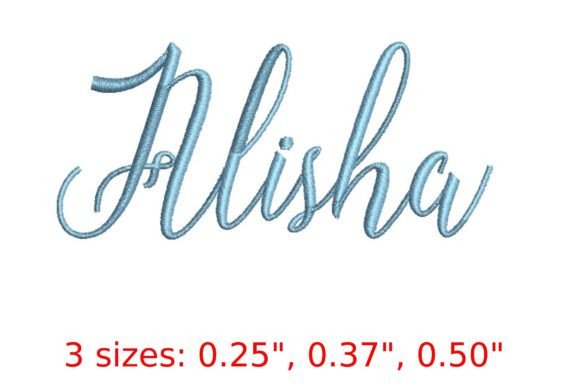
The Alisha Embroidery Font immediately feels like a warm, inviting design that carries a sense of elegance and positivity. Its script style suggests a personal touch, making it ideal for small businesses that want to convey friendliness and care in their branding. The font’s description mentions spreading positivity with every stitch, which aligns well with its visual personality—soft yet refined, classic yet approachable.
As an experienced embroidery designer, I find the Alisha Embroidery Font to be versatile enough for both casual and professional use. It has a subtle handcrafted feel that can enhance handmade products without appearing too busy or overly decorative. This makes it a great fit for a variety of applications, especially in the Back To School category where warmth and approachability are key.
Real-World Business Use: From Patches to Apparel
The Alisha Embroidery Font is well-suited for a range of small business merch and custom apparel projects. It works particularly well as an embroidered patch, adding a unique signature to uniforms, caps, and tote bags. Its elegant curves make it ideal for cap embroidery and apron embroidery, where detail and readability matter.
For brand identity, the Alisha Embroidery Font offers a consistent visual element that can be used across multiple product types. Whether it's a chest logo accent, a work shirt embellishment, or a tote bag design, this font helps create a cohesive brand presence. It also lends itself well to product packaging accents and customer gifts, enhancing the overall aesthetic of the finished product.
Design Considerations for Commercial Use
While the Alisha Embroidery Font is visually appealing, there are some practical considerations when using it for commercial embroidery. For instance, its detailed outlines and textured appearance may require careful attention to stitch density and thread color contrast. When working with small patch sizes or curved surfaces, the font might lose clarity if not properly scaled or adjusted.
It’s important to test the Alisha Embroidery Font in black and white first to ensure it remains legible and maintains its intended character. Additionally, reviewing spacing and ensuring proper hoop size will help prevent distortion during the embroidery process. Using the right stabilizer and considering the fabric texture will also impact the final look of the finished product.
Where to Use the Alisha Embroidery Font Carefully
The Alisha Embroidery Font shines best on larger items like caps, totes, and uniforms where it can be clearly seen and appreciated. However, it should be used with caution on smaller items such as patches or tiny lettering on dark fabrics. These scenarios may require simplifying the design or adjusting the font to maintain readability and visual appeal.
When creating printable mockups, it’s essential to compare the Alisha Embroidery Font against other design assets to ensure it fits within the overall brand style. Confirming commercial licensing before production is also crucial, as it ensures the font can be used for digital embroidery file and commercial embroidery purposes without legal issues.
Impact on Brand Identity and Customer Engagement
Using the Alisha Embroidery Font can significantly influence brand identity and customer trust. Its friendly and elegant nature helps build a positive association with the brand, especially for businesses that value warmth and individuality. Customers are more likely to remember and engage with a brand that uses a distinctive and well-designed font like this one.
From a handmade product perspective, the Alisha Embroidery Font adds a personal touch that resonates with crafters and Etsy sellers. It enhances the visual consistency of the brand across various custom apparel and branded merchandise offerings. This consistency is vital for building recognition and loyalty among customers.
Practical Designer Notes for Success
As an embroidery designer, I recommend the following steps when working with the Alisha Embroidery Font:
- Test it in black and white to assess clarity and legibility.
- Check small patch size to ensure the design doesn’t become too dense or unclear.
- Review thread color contrast to make sure the font stands out on different fabric backgrounds.
- Inspect spacing to avoid overcrowding and maintain a balanced look.
- Confirm hoop size to prevent distortion during the embroidery process.
- Test on real fabric to see how the design performs in practice.
- Use proper stabilizer to support the fabric and ensure a clean finish.
- Create a printable mockup for client approval before proceeding with production.
- Compare it beside other design assets to maintain visual consistency.
- Confirm commercial licensing to ensure it’s suitable for business use.
By following these steps, you’ll be able to maximize the potential of the Alisha Embroidery Font and deliver high-quality, visually appealing embroidery file and finished product that meets your business goals.